
Bringing nature into your home or workspace offers numerous physical and mental health benefits — for humans, plants, and even our four-legged companions. It’s safe to say that being both a plant parent and a pet parent is incredibly rewarding, but it also comes with a unique challenge: keeping curious pets and potentially toxic plants safely separated.
With nearly 70% of American households including a pet, creating a space that supports both greenery and animal safety is more important than ever. The good news? You don’t have to choose one over the other.
From smart plant placement to selecting non-toxic species, there are several effective ways to ensure your pets and plants can coexist peacefully. Let’s explore practical strategies to help everyone thrive under the same roof.
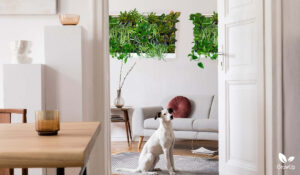
Keeping Plants Away From Curious Paws
One of the simplest ways to keep pets safe around plants is to place greenery where pets can’t or won’t reach it. While no solution is entirely foolproof (especially with athletic cats or determined dogs), thoughtful placement can significantly reduce risk.
Hanging Baskets
Suspended planters are both stylish and practical. Hanging baskets keep plants well out of reach while adding visual interest and dimension to a space. Only bipedal creatures (that’s us) will be able to access them.
High Shelves & Ledges
Placing plants on high shelves, plant ladders, or window ledges keeps them safely above nose and paw level. These spots also tend to offer great natural light, making them ideal for many indoor plants.
Green walls (Living Walls)
Living walls are one of the most effective and design-forward ways to keep plants away from pets. By mounting plants vertically and several feet off the ground, you eliminate surfaces pets can climb or jump onto. Custom installations also allow you to choose pet-safe species and design a system that fits seamlessly into your space.
Natural Deterrents
Some pets are deterred by certain smells. Used coffee grounds, when mixed into soil as compost, can discourage sniffing and nibbling while also benefiting plant health.
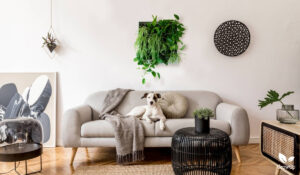
Pet-Safe Plants to Consider
Sometimes, the simplest solution is choosing plants that pose no risk at all. If your pets are particularly curious — or if you’re committed to features like greenwalls where separation isn’t always possible — opting for non-toxic plants provides peace of mind.
Here are several pet-safe plant options that work beautifully in homes and workspaces:
Boston Fern
A lush, classic plant known for its resilience and longevity. Great for shelves, hanging baskets, or greenwalls.
Burro’s Tail
A unique succulent with cascading stems of plump green leaves. Best kept in elevated planters to protect its delicate structure.
Basil
This fragrant, functional herb adds both beauty and flavor, and it’s safe for pets if nibbled.
Orchids
Elegant and low maintenance, orchids add a pop of color and are safe for cats and dogs.
Spider Plant
One of the easiest indoor plants to maintain, spider plants are hardy, adaptable, and completely non-toxic to pets.
Calathea (Prayer Plant Family)
Known for striking patterns and movement throughout the day, calatheas are pet-safe and thrive in indirect light.
Areca Palm
A soft, airy palm that brings a tropical feel indoors while remaining safe for animals.
For a more comprehensive list and guidance on choosing the right plants for your environment, explore GrowUp’s Indoor Plant Guide.
You can also reference the ASPCA’s database for up-to-date lists of plants safe for cats and dogs.
Safety Tips for Pet-and-Plant Parents
Nature is all about balance. Maintain harmony between your furry friends and leafy companions with these best practices:
-
Do your research
Always confirm whether a plant is toxic before bringing it into a pet-friendly space. -
Monitor outdoor plants
Pets may encounter weeds or wild plants in yards and public spaces — keep an eye on what they’re sniffing or eating. -
Keep emergency information accessible
Save Poison Control and your emergency veterinarian’s contact details on your phone and post them somewhere visible at home. -
Consider pet insurance
Proactive protection can provide peace of mind if accidents happen — just as you would insure your home or car.
Creating a space that supports both biophilic design and pet safety is entirely achievable with thoughtful planning. Whether through elevated plant displays, carefully selected non-toxic species, or innovative solutions like greenwalls, you can enjoy the benefits of greenery without compromising your pets’ wellbeing.






